Toilet Overflow Cleanup in Indianapolis
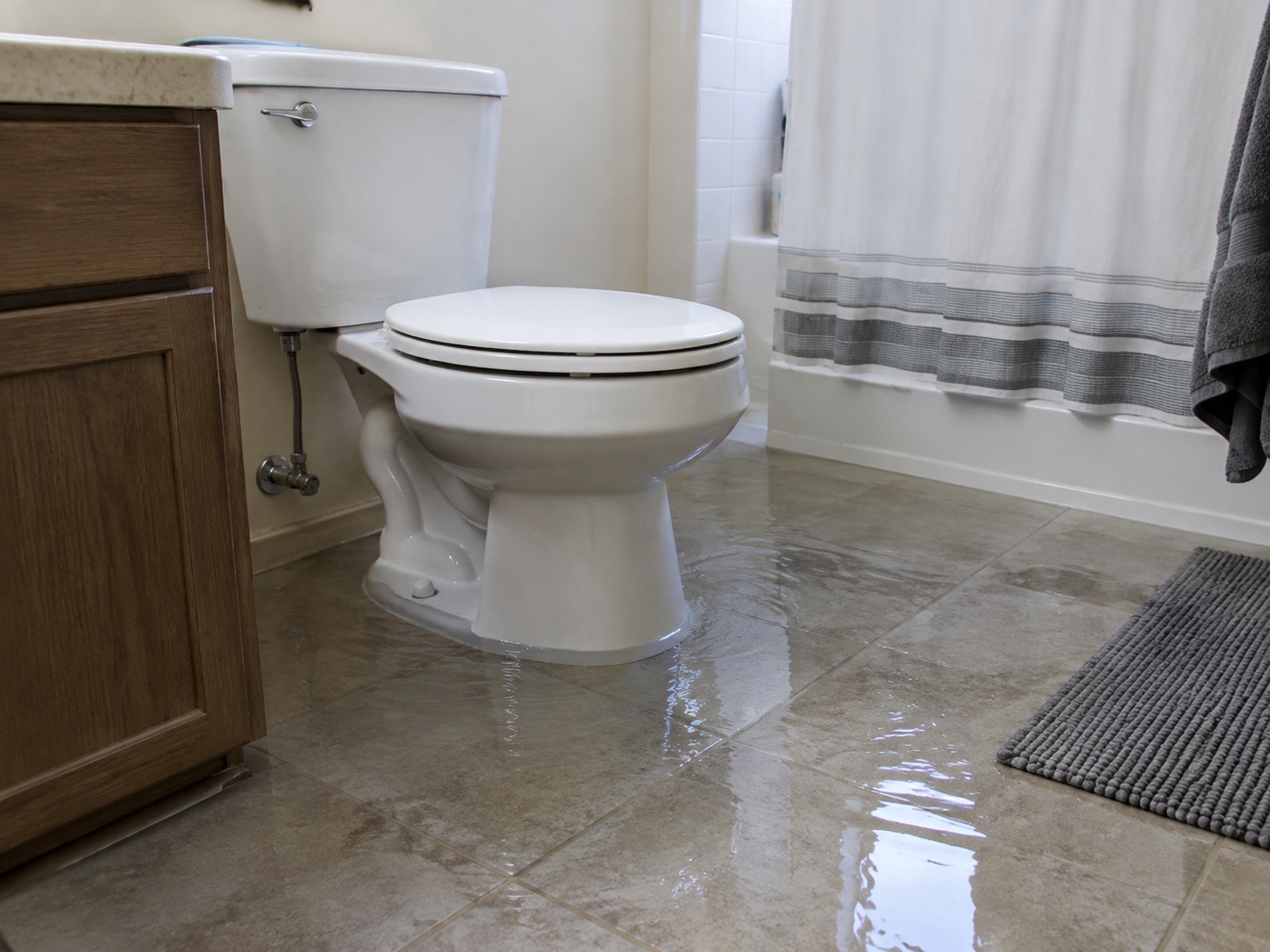
An overflowing toilet can damage a bathroom and adjoining rooms quickly. Water from the bowl may carry harmful contaminants even if it looks clear. Protecting people, stopping the flow, and arranging proper sanitation are more important than simply mopping the floor.
What causes this water damage?
A blocked toilet, clogged branch drain, main sewer obstruction, or malfunctioning fill valve can cause an overflow. Multiple slow drains, gurgling fixtures, or water rising in a shower suggest a wider drainage problem rather than an isolated toilet clog.
What to do first
- 1
Stop flushing and keep people out
Do not flush again. Keep children and pets away and avoid contact with bowl overflow. If water has reached outlets or equipment, do not enter until electrical hazards are addressed.
- 2
Stop the incoming water safely
Turn the supply valve behind the toilet clockwise if it is reachable without entering contaminated water. If it will not close, use the home’s main shutoff. Do not force a seized valve.
- 3
Call a plumber for the blockage
If several fixtures are backing up, stop using sinks, showers, washing machines, and toilets throughout the home. A plumber should identify and clear the obstruction. A sewer backup can continue despite closing the toilet supply.
- 4
Document and arrange professional cleanup
Photograph affected surfaces from a safe position. Report the source to your insurer and arrange contaminated-water extraction, sanitation, and moisture assessment. Keep the bathroom isolated until cleaned and cleared for use.
Cleanup, drying, and mitigation
Separate a clean tank or supply-line leak from bowl overflow. A qualified assessment determines contamination and the materials that can be retained.
Contaminated water can seep beneath tile, around the toilet flange, into grout, and under adjacent flooring. Porous materials may need removal rather than surface cleaning.
After controlled extraction and cleaning, dry framing and subflooring with appropriate equipment and monitor moisture. Do not reinstall flooring over damp or contaminated materials.
What not to do
- Do not flush repeatedly or use other drains if a main-line backup is suspected.
- Do not use a household vacuum or spread contaminated water with fans.
- Do not mix bleach, ammonia, drain cleaners, or other cleaning products.
- Do not assume wiping tile makes the subfloor or adjoining carpet sanitary.
Reducing the risk of another loss
Flush only toilet paper and human waste—not wipes, hygiene products, or paper towels. Repair toilets that keep running and address recurrent clogs with a plumber. Repeated backups need diagnosis rather than repeated plunging.
Toilet Overflow: frequently asked questions
- Is every toilet leak sewage?
- No. A tank or supply-line leak may originate as clean water. Overflow from the bowl, particularly with waste or a drain backup, should be treated as contaminated until assessed.
- Can I save bathroom carpet after an overflow?
- Porous carpet and padding exposed to sewage generally require disposal. A professional should determine the water category and scope before materials are retained.
- Why are other drains backing up too?
- A blockage farther along the drainage system or a sewer backup can affect multiple fixtures. Stop water use and call a plumber rather than repeatedly flushing.
- Does insurance cover toilet overflow cleanup?
- Coverage depends on the cause and policy. Sewer and drain backups may require a separate endorsement. Document the event and ask your insurer about your specific coverage.
Water damage in Indianapolis? Get help now.
Call for a free estimate and 24/7 emergency assistance with water extraction, cleanup, and structural drying in Indianapolis and surrounding communities.
Emergency water damage assistance
Call (317) 458-9518