Washing Machine Water Damage Cleanup in Indianapolis
A failed washing machine hose or overflowing drain can send water from the laundry room into hallways, wall cavities, and rooms below. Supply-line water and used wash water require different cleanup decisions. Fast, safe action helps limit damage to flooring and nearby living spaces.
What causes this water damage?
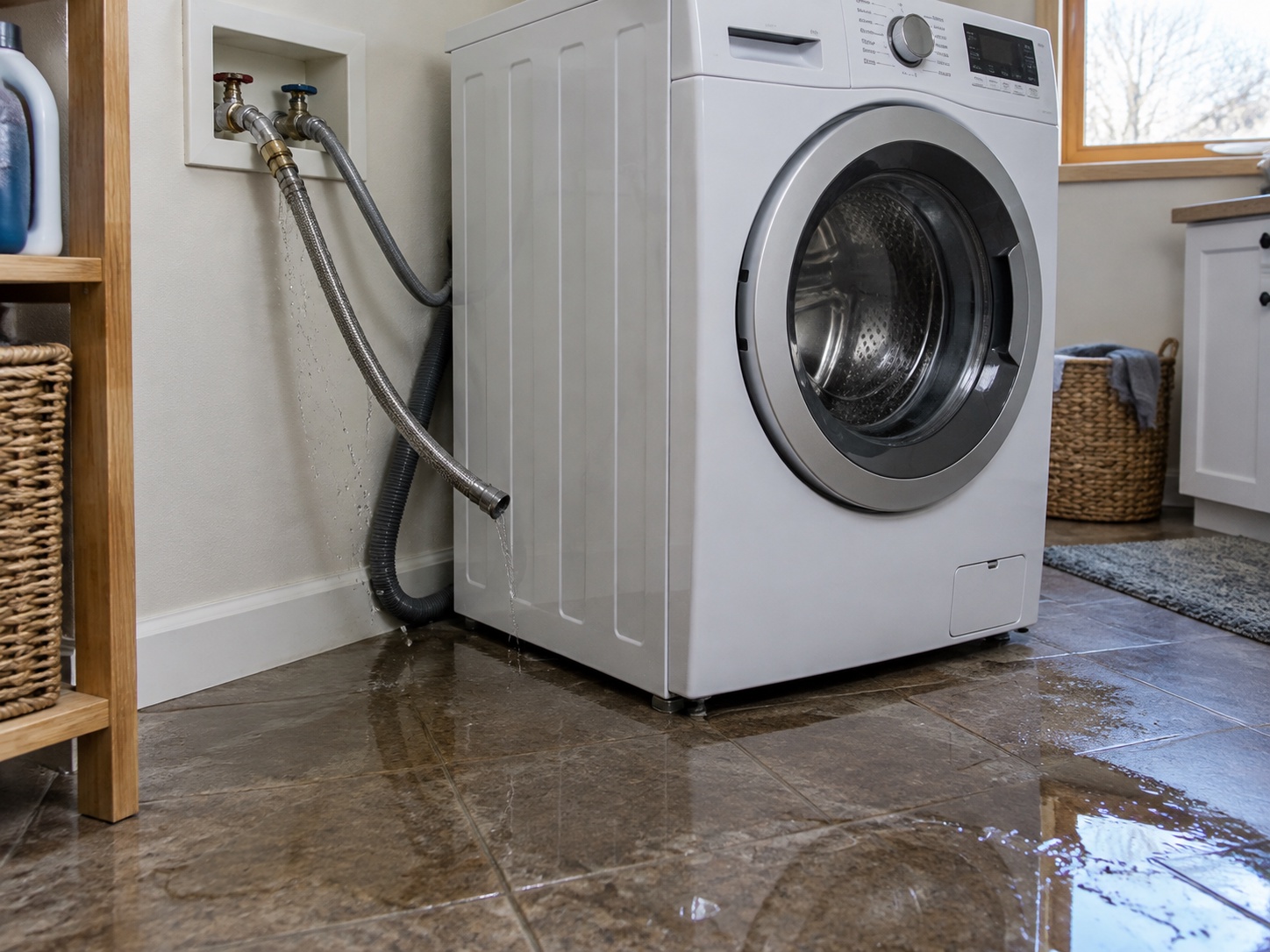
Loose connections, deteriorated supply hoses, a blocked standpipe, faulty inlet valves, and worn door seals are common sources. A supply hose can continue leaking even when the machine is off. Overflow during a wash cycle may contain detergent, soil, and other contaminants, so do not judge safety by appearance alone.
What to do first
- 1
Keep clear of water near power
Do not reach behind the machine or pull its plug while standing on a wet floor. If you can safely reach a dry electrical panel, isolate the affected circuit. If not, get help from an electrician or utility before entering.
- 2
Close the water supply
Close both hot and cold supply valves if they are safely accessible. Use the main home shutoff if a valve cannot be reached or will not stop the leak. Stopping a cycle does not shut off a ruptured pressurized hose.
- 3
Identify the source without dismantling the appliance
Note whether water came from a hose, door, or drain. Photograph what you can see safely. Have a plumber address a drain or supply-line failure and an appliance technician inspect internal faults before another cycle.
- 4
Protect surrounding rooms and call for mitigation
Keep people and pets away from used wash water. Move dry belongings out of its path only when safe. Document affected flooring and ceilings below the laundry room, then arrange extraction and moisture checks.
Cleanup, drying, and mitigation
Check under the appliance, behind baseboards, beneath vinyl or laminate flooring, and in ceilings below an upstairs laundry room.
Assess water contamination before choosing cleaning methods. Used wash water may require removal of affected porous materials and appropriate surface cleaning.
Professionals extract water and establish drying with dehumidifiers and air movers where appropriate. They monitor wall, subfloor, and framing moisture before reinstalling finishes.
What not to do
- Do not unplug or move the washing machine while standing in water.
- Do not run another cycle to test a machine that has flooded the room.
- Do not direct fans across contaminated water before cleanup.
- Do not cover damp flooring with a rug or reinstall trim before moisture is checked.
Reducing the risk of another loss
Inspect hoses and connections regularly and replace them according to manufacturer guidance. Avoid kinks and overloaded loads. Keep the drain clear, consider a leak detector and automatic shutoff, and avoid leaving the washer running when nobody is home.
Washing Machine Leaks: frequently asked questions
- Is washing machine water contaminated?
- Water from a supply hose may begin as clean water, but used wash water contains detergent and contaminants. Exposure time and materials it contacts can change the cleanup requirements.
- Why is the washer leaking when it is off?
- Supply hoses and connections remain pressurized, and a faulty inlet valve can allow water into the appliance. Close the supply valves and have the source inspected.
- Can water damage reach the room below?
- Yes. Water can travel through floor seams and penetrations into ceiling cavities below. Staining, dripping, or a sagging ceiling warrants prompt professional assessment; stay clear of unstable ceilings.
- Will insurance pay for cleanup?
- A sudden accidental hose failure may qualify for coverage, while long-term leaks or maintenance problems may not. Confirm your policy with your insurer and keep photographs and receipts.
Water damage in Indianapolis? Get help now.
Call for a free estimate and 24/7 emergency assistance with water extraction, cleanup, and structural drying in Indianapolis and surrounding communities.
Emergency water damage assistance
Call (317) 458-9518