
Drying & repairs · Indianapolis, Indiana
How do I know if water is trapped under kitchen cabinets?
By 317 Water Damage ·
Swollen cabinet bases, loose toe kicks, floor changes, stains, or odors may indicate concealed moisture. Water from a nearby appliance or supply line can move underneath cabinets without producing a large visible puddle.
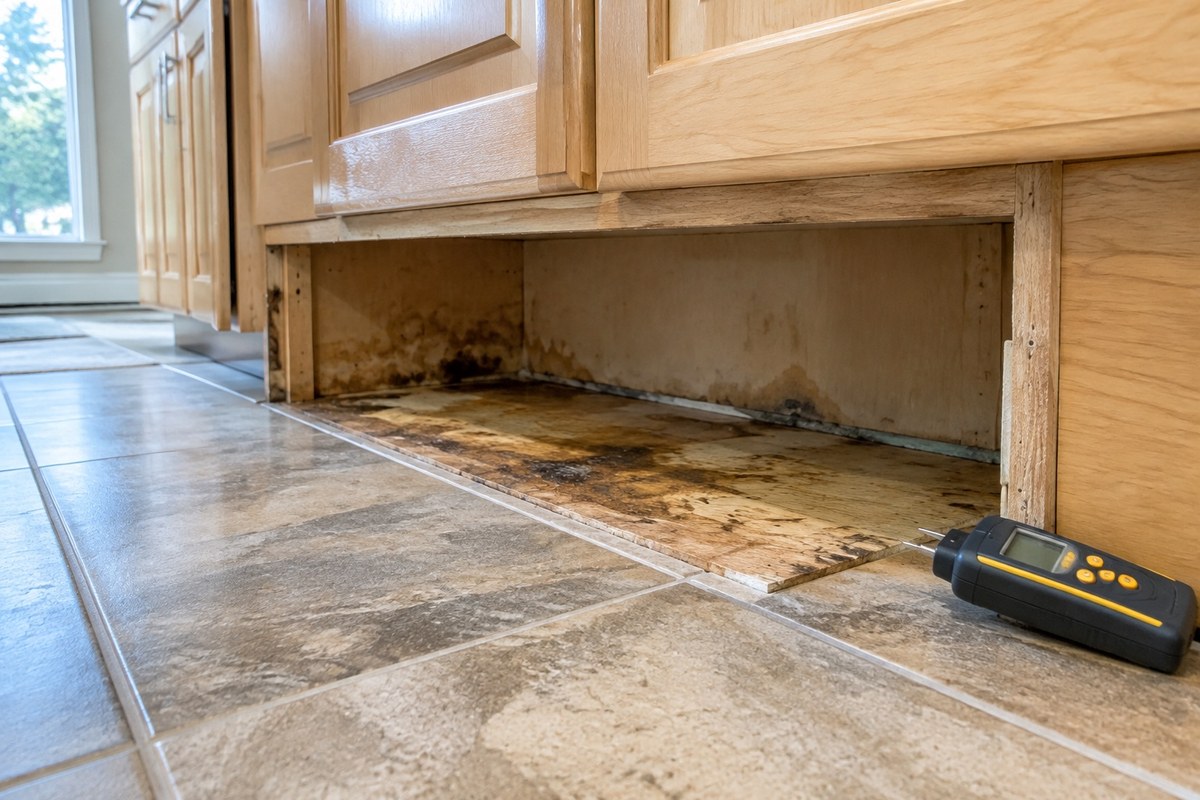
Follow the likely water path
Record whether symptoms started after a sink, dishwasher, refrigerator, or adjacent utility leak. Check accessible areas without dismantling unstable or wet electrical equipment. A source assessment helps distinguish a continuing leak from moisture left after an earlier loss.
Measure before assuming salvage
A dry door does not establish a dry cabinet box or subfloor. Moisture checks and material inspection can help determine whether components can be retained. Swollen particleboard and contaminated porous bases may require replacement.
Coordinate drying and finish repair
Access may be needed behind toe kicks or adjoining trim to evaluate the assembly. Discuss the plan with the restoration team before cabinet repairs begin. Matching doors or finishes may be separate from correcting moisture beneath the units.
Your next steps
- Record the nearby leak history.
- Request cabinet-base and subfloor assessment.
- Discuss salvage before covering damaged components.
Safety and recovery references
- EPA: Flood cleanup and indoor air quality
- CDC: Mold cleanup after disasters
- National Flood Insurance Program: Recovery checklist
General guidance does not replace a site assessment, licensed trade advice, or your insurer’s policy review. Keep out of areas with electrical, structural, or contamination hazards.