Drying & repairs · Indianapolis, Indiana
How long does water damage restoration take?
By 317 Water Damage ·
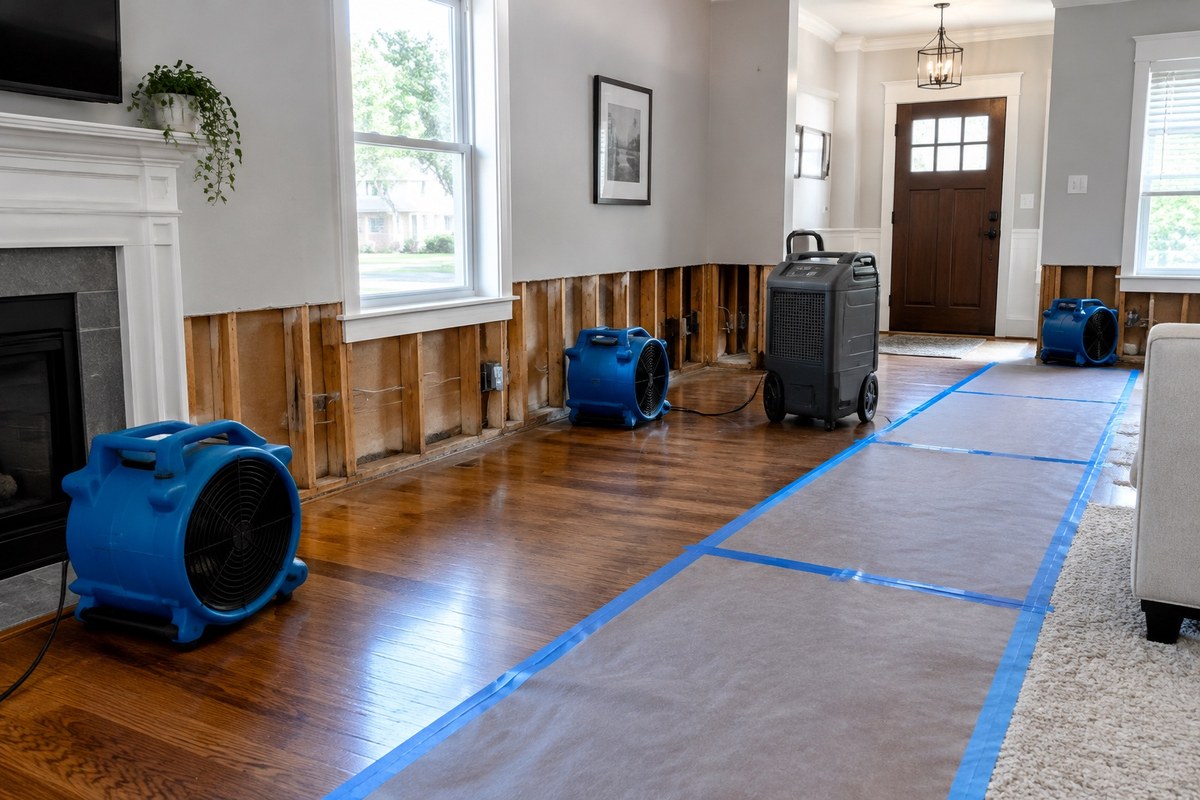
Restoration time depends on moisture levels, materials, contamination, and repair needs. Water extraction, structural drying, and rebuilding are separate stages; the floor looking dry does not mean the entire project is finished.
Why the timeline varies
A promptly discovered leak on a hard surface is different from water soaking insulation, hardwood, or multiple floors. Hidden cavities and dense materials can extend drying. Contamination may also require removal and cleaning before drying equipment can be used effectively.
How drying completion is checked
A restoration team should use material moisture measurements and compare progress with drying goals. Ask how readings are documented and how equipment adjustments are decided. Calendar days alone are not a reliable way to confirm that a wall cavity is ready to close.
What comes after drying?
Replacement flooring, drywall finishing, painting, and specialist repairs may follow mitigation. Product availability and trade scheduling can add time. Ask for a stage-by-stage plan and updates when the scope changes, rather than a guaranteed completion date before the property is assessed.
Your next steps
- Ask for separate mitigation and repair timelines.
- Keep drying equipment operating as instructed.
- Request moisture documentation before rebuilding.
Safety and recovery references
- EPA: Flood cleanup and indoor air quality
- CDC: Mold cleanup after disasters
- National Flood Insurance Program: Recovery checklist
General guidance does not replace a site assessment, licensed trade advice, or your insurer’s policy review. Keep out of areas with electrical, structural, or contamination hazards.