Drying & repairs · Indianapolis, Indiana
Can household fans dry water damage completely?
By 317 Water Damage ·
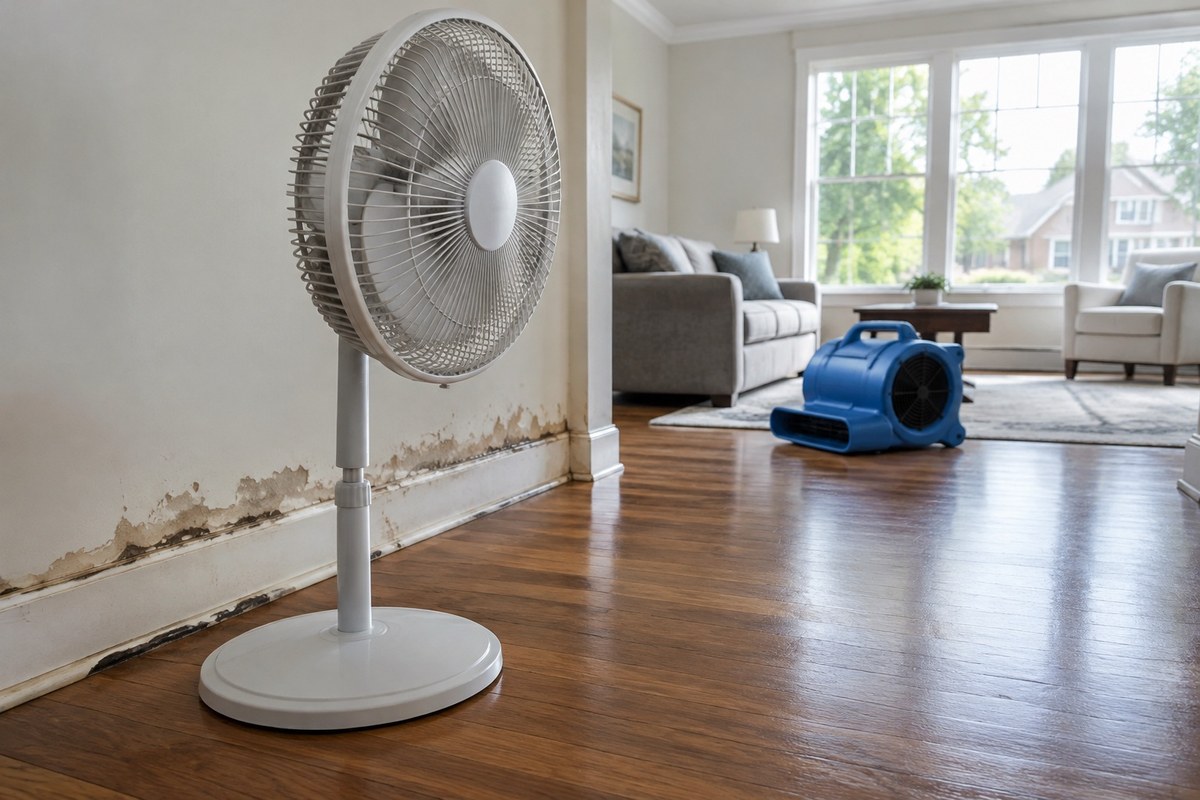
Household fans may help evaporate surface moisture in suitable conditions, but they do not confirm dry wall cavities or subflooring. Contaminated water and suspected mold also change whether moving air is appropriate.
Air movement is not water extraction
A fan does not remove a pool of water or address soaked padding. Extraction and material assessment come first. Using powered equipment in wet areas introduces electrical risk, so safe power must be established before operation.
Humidity and concealed materials matter
Evaporated water must be removed from the air, not simply circulated around the room. Dehumidification and airflow are selected for the space and materials. Moisture readings help evaluate whether the assembly is drying rather than just its exposed face.
Do not spread contamination
Avoid aiming fans across sewage, dirty floodwater, or suspected mold. Work areas may need isolation, removal, and cleaning before drying starts. Ask a restoration professional to assess the source and water path when flooring or walls are involved.
Your next steps
- Do not plug equipment in while standing in water.
- Assess contamination before using airflow.
- Use material readings to confirm drying.
Safety and recovery references
- EPA: Flood cleanup and indoor air quality
- CDC: Mold cleanup after disasters
- National Flood Insurance Program: Recovery checklist
General guidance does not replace a site assessment, licensed trade advice, or your insurer’s policy review. Keep out of areas with electrical, structural, or contamination hazards.