Drying & repairs · Indianapolis, Indiana
When does water-damaged drywall need replacement?
By 317 Water Damage ·
Replacement may be needed when drywall is weakened, heavily saturated, contaminated, or cannot be effectively dried. The water source, panel condition, and wall cavity all matter; there is no reliable decision based only on a stain.
Check strength and contamination
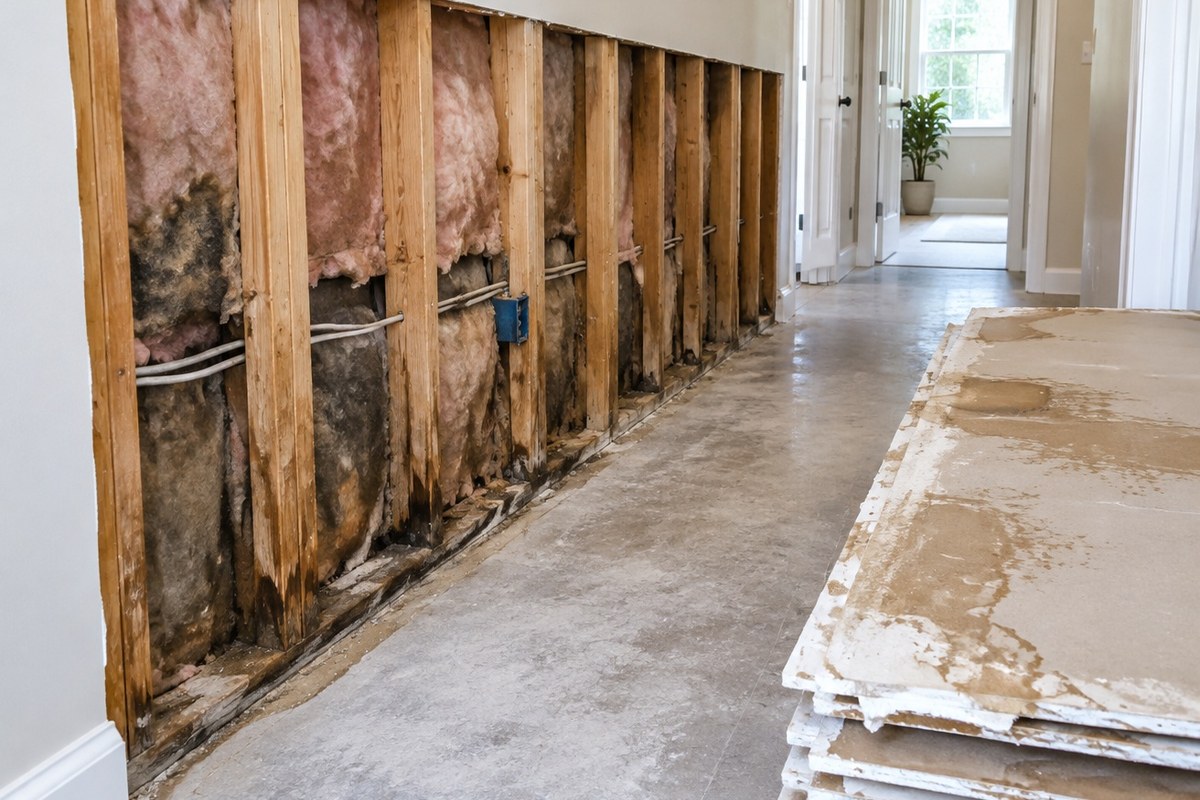
Softness, crumbling, sagging, or a contaminated water source can change the salvage decision. Do not push on unstable ceiling panels or disturb suspected contaminated material yourself. Qualified assessment should determine what can remain.
Evaluate the wall cavity
Insulation and framing may stay wet behind an apparently dry panel. Removing trim or unsuitable drywall may be needed to assess and dry concealed materials. The work scope should address the cavity, not simply patch the visible mark.
Replace finishes only when ready
New panels can seal in moisture if rebuilding starts too soon. Ask what measurements establish that retained framing is dry enough. Older materials may also need evaluation for regulated hazards before demolition.
Your next steps
- Keep clear of unstable wall or ceiling materials.
- Ask about insulation and framing moisture.
- Verify readiness before replacement drywall is installed.
Safety and recovery references
- EPA: Flood cleanup and indoor air quality
- CDC: Mold cleanup after disasters
- National Flood Insurance Program: Recovery checklist
General guidance does not replace a site assessment, licensed trade advice, or your insurer’s policy review. Keep out of areas with electrical, structural, or contamination hazards.