Water Heater Water Damage Cleanup in Indianapolis
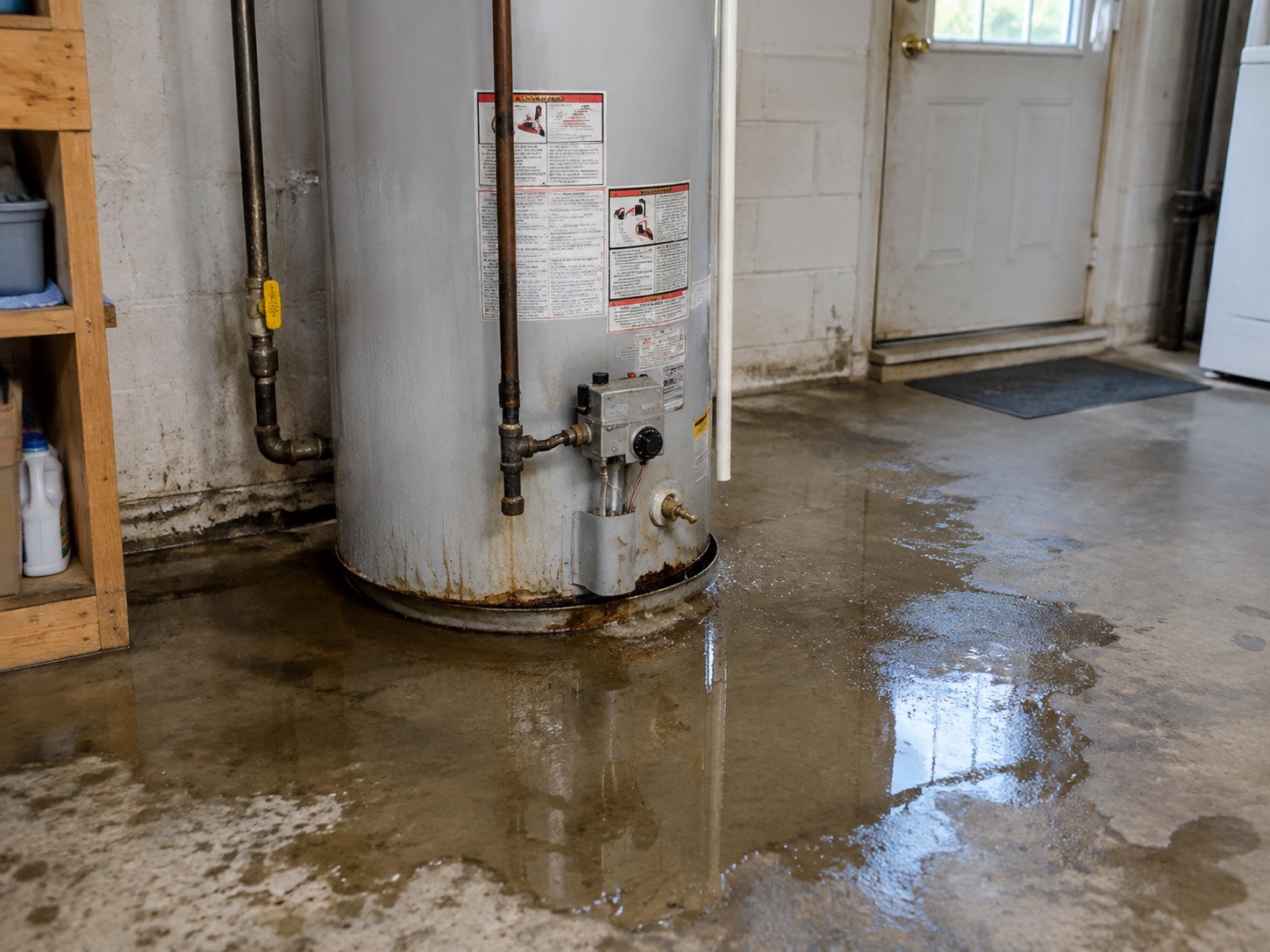
A failed water heater can flood a utility room, basement, or adjoining living space before you notice the leak. Stopping the supply is only part of the response: hot water, electricity, gas equipment, and moisture under flooring all need attention. Here is how to protect your household and arrange water damage cleanup in Indianapolis.
What causes this water damage?
Tank corrosion, worn connections, leaking drain valves, and pressure-related problems can all release water. A puddle at the base does not always mean the tank has ruptured: a plumber should inspect the tank, supply fittings, and discharge pipe. Water spreading beyond a drain pan can soak drywall, stored belongings, and subflooring.
What to do first
- 1
Stay clear of hot water and electrical hazards
Do not step into water near the heater, outlets, or electrical panel. Keep children and pets away. If you smell gas, leave immediately without operating switches and call 911 or the gas utility from outside.
- 2
Stop the cold-water supply when safely reachable
Close the cold-water inlet valve only from a dry, safe location. If that valve is inaccessible or will not close, shut off the home’s main water supply. Do not force a stuck valve or touch hot discharge piping.
- 3
Have the heater isolated and repaired
For an electric heater, switch off its breaker only if the panel and approach are dry. For a gas heater, follow the manufacturer’s shutoff instructions only when safe; otherwise call a qualified professional. A licensed plumber should repair or replace the unit. Do not drain or dismantle a hot, pressurized tank yourself.
- 4
Record the loss and arrange cleanup
From a safe location, photograph the heater, water line, and affected rooms. Contact your insurer about coverage and keep repair and mitigation receipts. Call a restoration team for extraction and hidden moisture assessment without waiting for water to dry on its own.
Cleanup, drying, and mitigation
Extract standing water after electrical and temperature hazards are resolved. Check neighboring rooms, closets, and the area under flooring—not just the utility room.
Evaluate wet carpet padding, insulation, baseboards, and drywall. Salvage depends on contamination, exposure time, and whether materials can actually be dried.
Use controlled air movement and dehumidification with moisture readings. Replace damaged finishes only after framing and subflooring meet the drying goal.
What not to do
- Do not restart a leaking or emptied heater before a qualified professional clears it.
- Do not cap a temperature-and-pressure relief valve or its discharge pipe.
- Do not enter standing water to reach shutoffs or use a household vacuum for extraction.
- Do not assume replacing the heater also solves moisture trapped under floors.
Reducing the risk of another loss
Have the heater serviced according to its manufacturer’s instructions. Ask a plumber about visible corrosion, recurring discharge, a drain pan routed appropriately, and a leak alarm or automatic shutoff. Keep the surrounding area accessible and check it regularly.
Water Heater Failures: frequently asked questions
- Does homeowners insurance cover water heater damage?
- Sudden accidental water damage may be covered, while gradual leaks and the cost of replacing a worn-out heater may not be. Your insurer determines coverage from your policy and the cause of the loss.
- Do I need a plumber and a restoration company?
- Often, yes. The plumber repairs the source; restoration professionals remove water, assess wet materials, and document structural drying.
- Can I clean up a small leak myself?
- A small amount of cool water on a safe, nonporous surface may be manageable once the source is stopped. Water near electrical equipment, under flooring, or inside walls needs professional assessment.
- How long does drying take?
- The depth of saturation, materials, and room conditions determine the timeline. Moisture readings—not a dry-looking floor—confirm when restoration can proceed.
Water damage in Indianapolis? Get help now.
Call for a free estimate and 24/7 emergency assistance with water extraction, cleanup, and structural drying in Indianapolis and surrounding communities.
Emergency water damage assistance
Call (317) 458-9518