
Storm Water Damage Restoration in Indianapolis
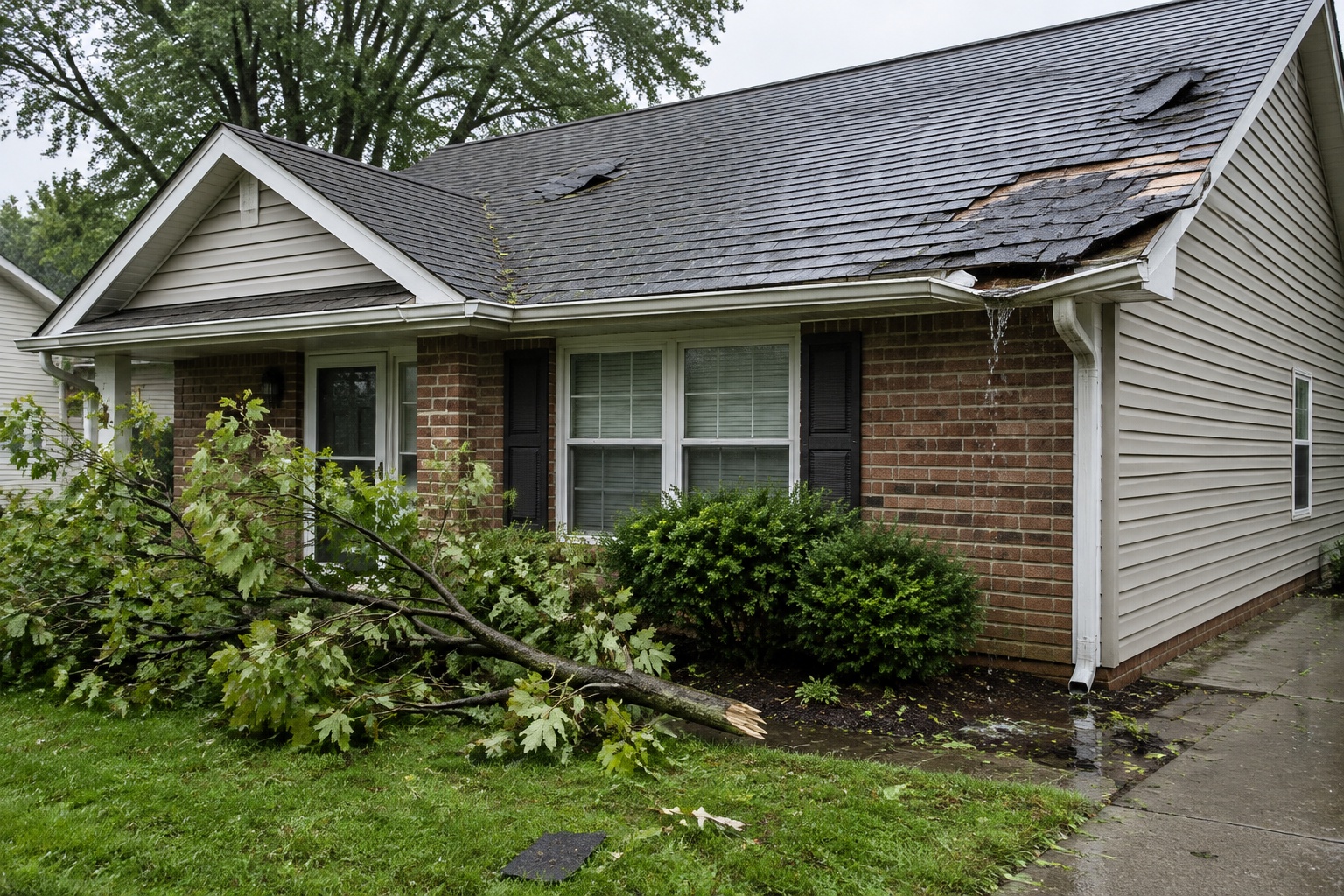
Heavy rain and wind can turn damaged shingles, broken windows, and overwhelmed drainage into indoor water damage. Indianapolis storms can affect the roof, living spaces, and basement at the same time. Begin with safety, then arrange temporary protection and a plan to dry affected materials.
What causes this water damage?
Wind can lift shingles, loosen flashing, and damage siding or windows. Blocked gutters and window wells can funnel rain toward the home. Water may also enter from saturated ground or surface flooding; identifying its path matters for both cleanup and insurance coverage.
What to do first
- 1
Wait for safe conditions
Stay sheltered during severe weather. Avoid downed wires, moving floodwater, unstable trees, and damaged structures. Leave a building with immediate structural hazards or a gas smell and call emergency services from a safe location.
- 2
Keep away from wet ceilings and electrical equipment
Do not stand beneath sagging ceilings or touch wet fixtures. Shut off affected circuits only from a dry, safely reachable panel. Otherwise have an electrician or utility isolate power.
- 3
Arrange temporary weather protection
Once conditions are safe, qualified professionals can tarp damaged roofing or board broken openings. Do not climb a wet or storm-damaged roof. Temporary protection should prevent more water without hiding the damage before documentation.
- 4
Document and begin source-specific cleanup
Photograph damage from the ground or other safe locations. Record affected rooms and damaged belongings. Contact your insurer, then arrange extraction and drying. Tell the restoration team whether water entered through the roof or from outdoor flooding.
Cleanup, drying, and mitigation
Trace water from the entry point through attic insulation, ceilings, walls, and flooring. The visible stain may be far from the roof defect.
Outdoor floodwater requires contaminated-water precautions. Roof leaks and surface flooding can require different removal and sanitation decisions.
Coordinate temporary protection, extraction, material assessment, and measured structural drying. Complete permanent repairs and reinstall finishes only when the structure is dry and the source is resolved.
What not to do
- Do not climb onto a damaged roof or work near downed lines.
- Do not drive or walk through moving floodwater.
- Do not run HVAC equipment if floodwater reached the unit or ductwork.
- Do not paint over stains or seal wall cavities while they remain wet.
Reducing the risk of another loss
Have damaged shingles, flashing, and sealants inspected and repaired. Maintain gutters, downspouts, and window wells; direct drainage away from the foundation. Consider sump pump backup power where appropriate, and review storm, flood, and sewer-backup coverage before the next event.
Storm Damage: frequently asked questions
- Does homeowners insurance cover storm water damage?
- Wind damage and resulting rain intrusion may be covered, while surface flooding typically requires separate flood coverage. Policy terms, the entry point, and the cause determine coverage.
- Should I tarp the roof myself?
- A wet or damaged roof presents fall and structural hazards. Arrange qualified temporary protection rather than climbing onto the roof yourself.
- What if the ceiling is sagging?
- Keep everyone out from underneath it and arrange urgent professional assessment. Wet ceiling materials can collapse; do not poke or drain them yourself.
- Why is drying needed after the roof is repaired?
- Repair stops new intrusion but does not remove water already inside insulation, framing, and walls. Moisture checks and structural drying address that remaining damage.
Water damage in Indianapolis? Get help now.
Call for a free estimate and 24/7 emergency assistance with water extraction, cleanup, and structural drying in Indianapolis and surrounding communities.
Emergency water damage assistance
Call (317) 458-9518