Hiring & emergencies · Indianapolis, Indiana
What is water damage restoration, and what does it include?
By 317 Water Damage ·
Water damage restoration is the process of assessing a water loss, removing water, addressing affected materials, drying retained building components, and repairing damage. The exact sequence changes with the source and condition of the property.
Mitigation stops the loss from worsening
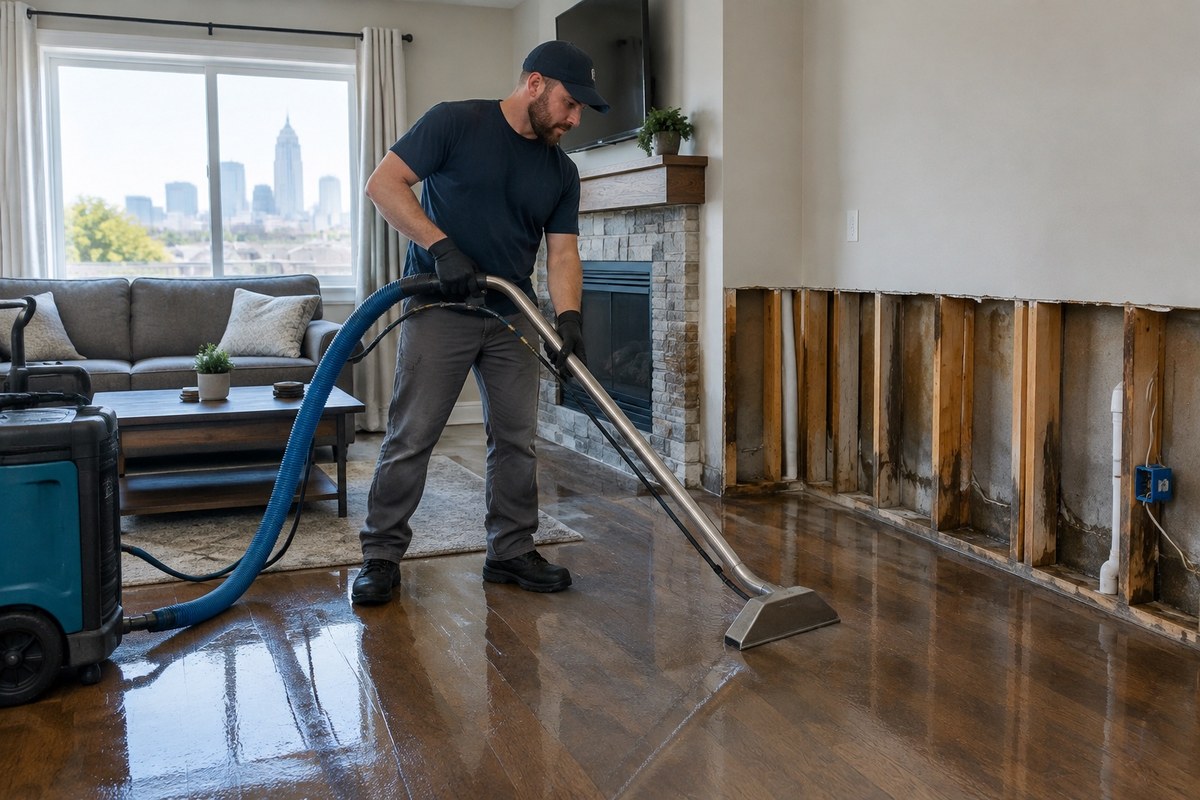
The first stage includes safe access, source coordination, extraction, and decisions about wet materials. A restoration company may coordinate with a plumber or electrician, but removing water does not repair a failed pipe or make an unsafe electrical system usable.
Drying goes beyond visible surfaces
Walls, insulation, flooring assemblies, and cabinets can hold moisture after pooling disappears. Moisture measurements help determine where drying is needed and whether material removal is necessary. Suitable equipment should be used with a plan, not simply placed in the room indefinitely.
Restoration includes the next repair decisions
Some finishes can be retained; others require replacement. Ask for clear boundaries between cleaning, drying, contents work, and reconstruction. A documented scope helps homeowners understand what is complete and what still needs a qualified trade.
Your next steps
- Identify the source and safety concerns.
- Ask for a written scope covering each stage.
- Verify drying before new finishes are installed.
Safety and recovery references
- EPA: Flood cleanup and indoor air quality
- CDC: Mold cleanup after disasters
- National Flood Insurance Program: Recovery checklist
General guidance does not replace a site assessment, licensed trade advice, or your insurer’s policy review. Keep out of areas with electrical, structural, or contamination hazards.