
Mold & moisture · Indianapolis, Indiana
What are the signs of hidden water damage inside walls?
By 317 Water Damage ·
Stains, bubbling paint, softened drywall, musty odors, and recurring dampness can indicate hidden water. None proves the exact source on its own; the next step is to investigate the leak path and measure suspect materials.
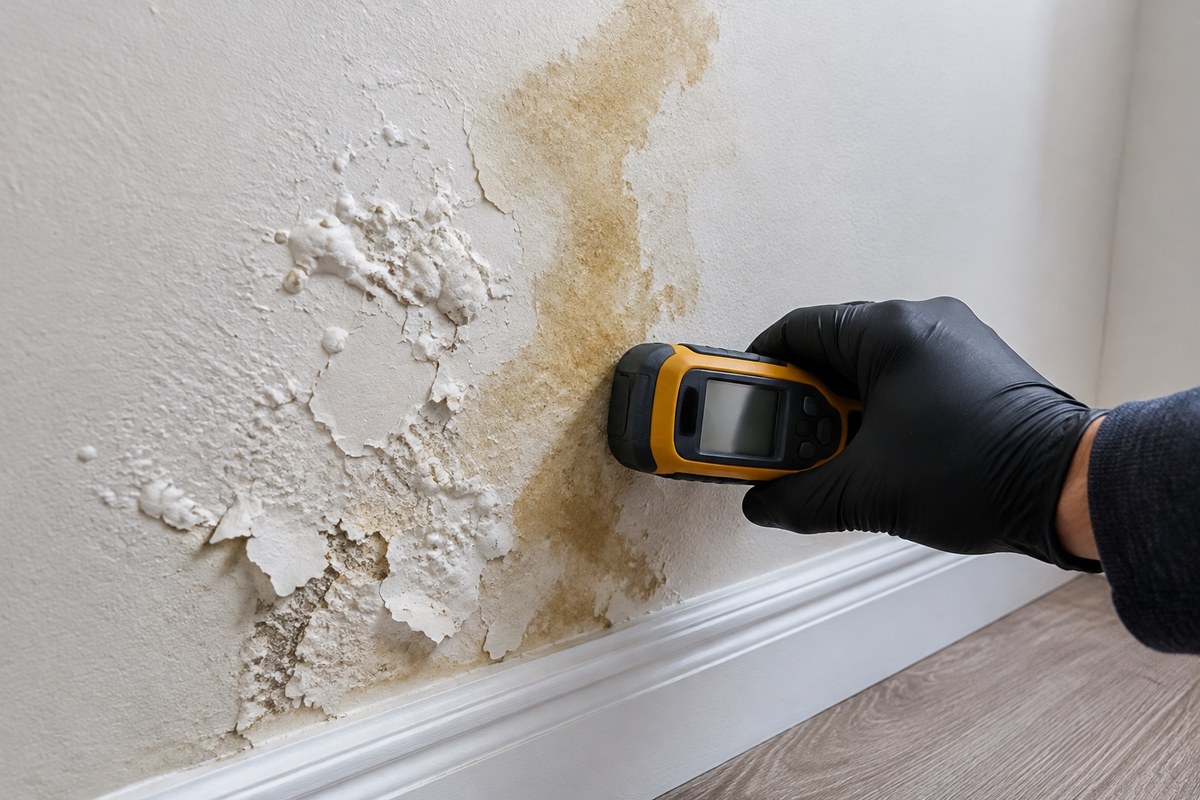
Look for patterns without opening the wall yourself
Note whether symptoms follow rain, shower use, laundry cycles, or periods when no fixtures are running. Photograph changes over time. Water may travel along framing before appearing, so the stain is not always directly below the failure.
Visible and measured evidence should agree
A moisture meter can help check suspect surfaces, while thermal imaging may reveal temperature patterns worth investigating. Thermal images do not independently prove water. A qualified inspection combines observations with appropriate measurements and source evaluation.
Why covering the stain is not enough
Painting or placing furniture against the area can hide continuing damage. Damp insulation and framing need evaluation before finishes are replaced. If walls bulge, ceilings sag, or electrical fixtures are wet, keep out and arrange urgent safety assessment.
Your next steps
- Record when symptoms appear.
- Request moisture and source assessment.
- Avoid sealing or repainting an active problem.
Safety and recovery references
- EPA: Flood cleanup and indoor air quality
- CDC: Mold cleanup after disasters
- National Flood Insurance Program: Recovery checklist
General guidance does not replace a site assessment, licensed trade advice, or your insurer’s policy review. Keep out of areas with electrical, structural, or contamination hazards.