Basements & storms · Indianapolis, Indiana
What should I do about crawlspace water after heavy rain?
By 317 Water Damage ·
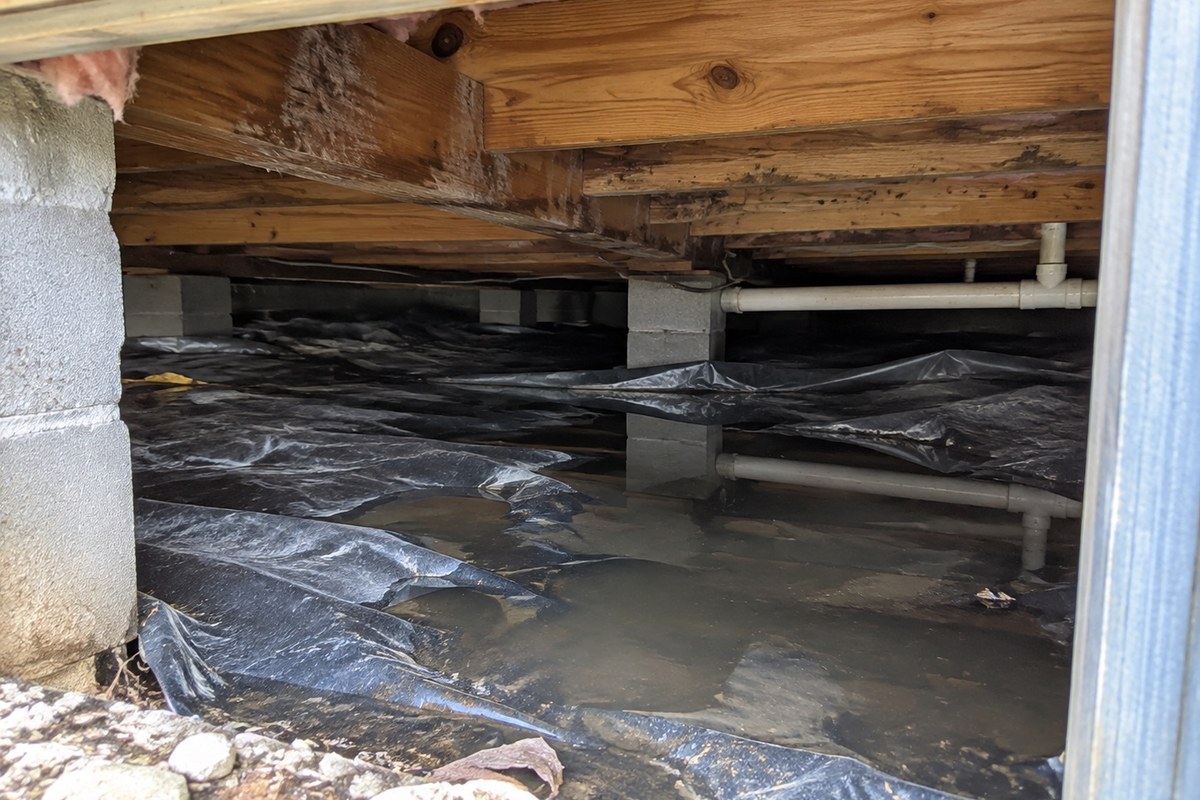
Avoid entering a wet crawlspace until access and electrical, contamination, and structural hazards are assessed. The source may involve drainage, groundwater, or plumbing, and removing water alone may not resolve the reason it returns.
Investigate without unsafe entry
Look at safely accessible exterior drainage and note whether the problem follows rain or fixture use. Do not crawl near wet wiring, sewage, unstable materials, or unsafe confined access. Qualified inspection should identify the water path.
Check materials, not just pooling
Insulation, joists, stored items, and other materials may retain moisture after water recedes. A restoration plan should assess what can be retained and how it will be dried. Persistent dampness can also affect odors in living spaces above.
Repair the cause before enclosing the work
Drainage corrections, plumbing repair, or other improvements may require appropriate specialists. Ask about moisture monitoring and repair readiness. Replacing insulation while the source remains active can leave the same problem hidden again.
Your next steps
- Do not enter unsafe crawlspace conditions.
- Arrange source and material assessment.
- Correct recurring moisture before repairs are enclosed.
Safety and recovery references
- EPA: Flood cleanup and indoor air quality
- CDC: Mold cleanup after disasters
- National Flood Insurance Program: Recovery checklist
General guidance does not replace a site assessment, licensed trade advice, or your insurer’s policy review. Keep out of areas with electrical, structural, or contamination hazards.